

What the map pack actually is
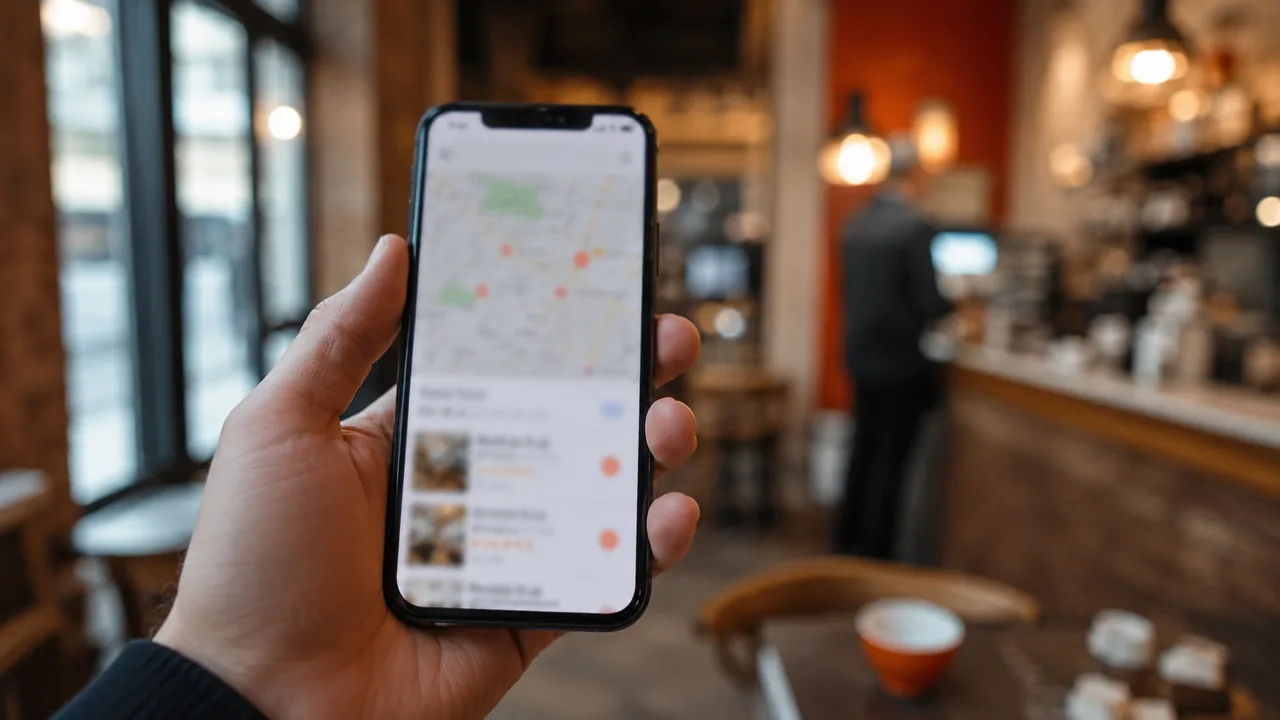
The map pack, sometimes called the local pack, is the block of three businesses Google shows on a small map above the ordinary blue links when a search has local intent. Type "plumber Enfield", "dentist near me" or "accountant EN2" and the first thing on the screen is that map and its three results, each with a star rating, a distance and a tap-to-call button. For local searches it takes the lion's share of the clicks and calls, because it sits at the very top and answers the question the searcher is actually asking: who does this, near me, now.
Ranking here is a different contest from ranking in the ordinary results below it. The blue links are scored mostly on the page and the links pointing at it. The map pack is scored on your business as a local entity: your Google Business Profile, your proximity to the searcher, and how established and trusted you are. This guide is about that contest, the mechanics of why Google puts one Enfield business in the three and leaves another out, and how those mechanics shift from one part of the borough to the next.
Setting up and filling the profile itself is a job of its own, covered in our guide to Google Business Profile optimisation. Here we take the profile as given and focus on what makes it rank.
The three signals Google ranks on
Google publishes the basis for local ranking, which is unusual and worth taking literally. It comes down to three signals. Relevance is how well your profile matches what the person searched. Distance is how far you are from the place the search was made. Prominence is how well known and established your business is. Almost every other piece of local SEO advice is, underneath, a way of improving one of these three.
The practical consequence is that you have two firm levers and one partial one. Relevance and prominence are fully in your hands. Distance you can only influence at the edges, because you cannot move your premises closer to every searcher across EN1, EN2 and EN3 at once. So a sound local strategy pours effort into relevance and prominence, and uses honest service-area and content choices to soften the distance disadvantage where it can.
- Relevance: your primary category, services and the words on your profile and site matching the search
- Distance: your location relative to where each individual search happens, judged fresh for every query
- Prominence: reviews, citations, links and real-world recognition that mark you as an established business
Why rankings change street by street

The most misunderstood thing about the map pack is that there is no single ranking. Distance is measured from the spot the search is made, so the same business can sit first for a search in Enfield Town and drop out of the three for the same search made two miles away in Ponders End. Google builds the pack around the searcher, not around one fixed league table.
This is why a thin "we cover all of London" page almost never ranks across a borough. It has no proximity advantage anywhere in particular and no relevance depth for any one area. A business that names and genuinely serves Enfield Town, Edmonton, Palmers Green and Southgate, with real detail for each, gives Google a reason to show it across more of those individual searches.
It also means your habit of Googling your own business name from your desk tells you very little. You are sitting on top of your own pin, logged in, with your own search history shaping the result. What you see is not what a customer a mile away sees. Measuring properly, covered further down, matters precisely because of this.
Winning on relevance
Relevance is the most controllable of the three and the quickest to move. It starts with your primary category, one of the strongest signals Google reads. Choose the single most specific category that describes your core service rather than a broad umbrella, then add secondary categories only for services you genuinely provide. The profile's services, description and attributes reinforce that core with the words customers actually type.
Relevance is not built on the profile alone. Google cross-reads your website, so the pages that describe your services and the areas you cover feed the same signal, and the two have to agree. A profile that says one thing while the website implies another is a weaker signal, not a stronger one. The detail of setting the profile up well lives in our Google Business Profile guide. The point here is that relevance is the lever that turns a complete profile into a ranking one.
Building prominence
Prominence is Google's read on how established and trusted you are, and it is the slowest of the three to build because it cannot be bought cheaply. Reviews are a large part of it: their number, your average rating and how recently they arrived all feed in, and a steady trickle reads as healthier than a burst of ten followed by a year of silence. Citations, your business listed consistently across trusted directories, confirm you are a real and settled local entity. Links from genuinely relevant local sites add to it, and so does plain ongoing activity on the profile.
Each of these is a subject in its own right, with its own guide on reviews and reputation, local citations, and earned local links. Pushing them too far here would just duplicate that work. What matters for ranking is that prominence is cumulative. It is the part of the map pack that rewards the business that has done the basics consistently for months, which is also why it is the hardest signal for a new competitor to leapfrog.
The distance you cannot control
You will not rank first for everyone everywhere, so the aim with distance is to compete wherever you realistically can and stop chasing searches you were never going to win. A business physically in Enfield Town has a natural edge for EN1 and EN2 searches and a natural disadvantage for a search made in Cockfosters or Edmonton. That is geometry, not a fault in your SEO.
What you can do is set an honest service area covering the EN postcodes you actually serve, and back it with content that earns relevance for those areas, so that when proximity is close between you and a competitor, relevance breaks the tie in your favour. A service-area business that hides its address and serves a real radius can rank across that radius, but it cannot invent presence in an area it does not cover. Faking an address to try risks a suspension that pulls you out of the pack entirely.
Measuring your real position
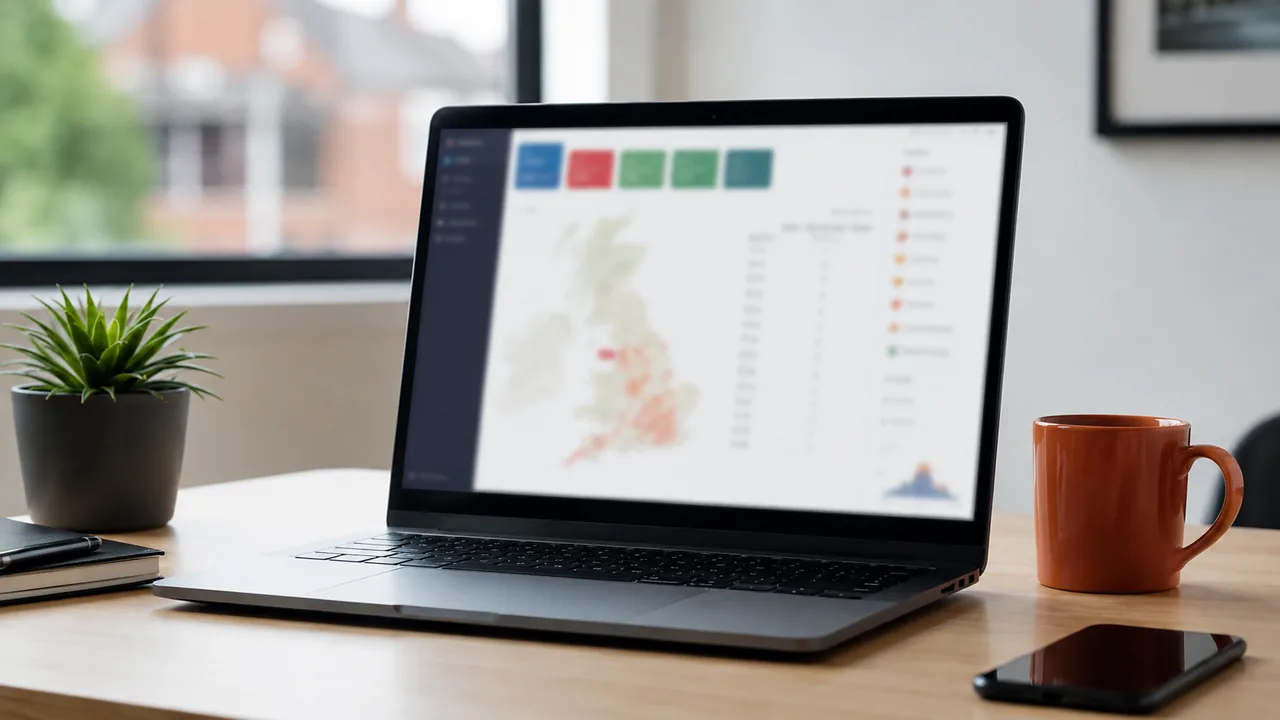
Because there is no single ranking, you cannot judge your position from one search at your desk. You need to see how you rank from different points across Enfield. The tools built for this run a grid of simulated searches over an area and show your rank at each point, so you might see that you are first around Enfield Town, fourth near Southgate and absent by Edmonton. That picture of where you are strong and weak is what tells you which area to work on next.
Without a dedicated tool, an incognito window with the location set to a specific area is a rough check, far better than your logged-in search but still only one point on the map. The principle is the same either way: judge your local visibility by the searcher's location, never your own.
How long it really takes
Local ranking moves at the speed of trust, not the speed of a content edit. A profile that is freshly completed, correctly categorised and verified can start appearing for less competitive Enfield searches within a few weeks. Competitive categories, where established businesses already hold strong review counts and clean citations, take months of steady reviews and consistent listings to break into. The order things tend to move is relevance first, since it responds quickly to category and content changes, then prominence as reviews and citations accumulate.
The mistake is to treat it as a one-off project. The map pack rewards the business that keeps a steady flow of reviews coming, keeps its details identical everywhere, and keeps publishing genuine local content long after the initial setup. Consistency over months beats any short burst of activity.
Ranking area by area
Because proximity is judged per search, the real work of ranking across the borough is ten smaller jobs, one for each area you serve. The signals are the same everywhere, relevance and prominence and the geometry of distance, but the detail differs. The roads, the postcode, the customer mix and the competition in Enfield Town are not those of Palmers Green or Ponders End.
Our area guides go through this neighbourhood by neighbourhood, from Enfield Town and Edmonton to Southgate, Winchmore Hill, Cockfosters and Enfield Lock, each with the local detail that earns the relevance signal for that specific patch. If you serve the whole borough, the realistic plan is to win your home area first, where your proximity is strongest, then extend outward area by area.