

What 'near me' and voice searches are
"Near me" and voice searches are local-intent queries: someone wants something close to them, usually right now. They cover the obvious "plumber near me" typed into Google, the spoken "where is the nearest dentist" asked of a phone, and the large number of searches with no location words at all where Google infers the local intent from context. What unites them is urgency and proximity.
For a local business these are among the most valuable searches there are, because the person is ready to act and physically nearby. The catch is that you do not win them the way most people assume, by stuffing "near me" into your pages. You win them by being the local business Google is confident enough to serve.
You don't optimise for the words 'near me'
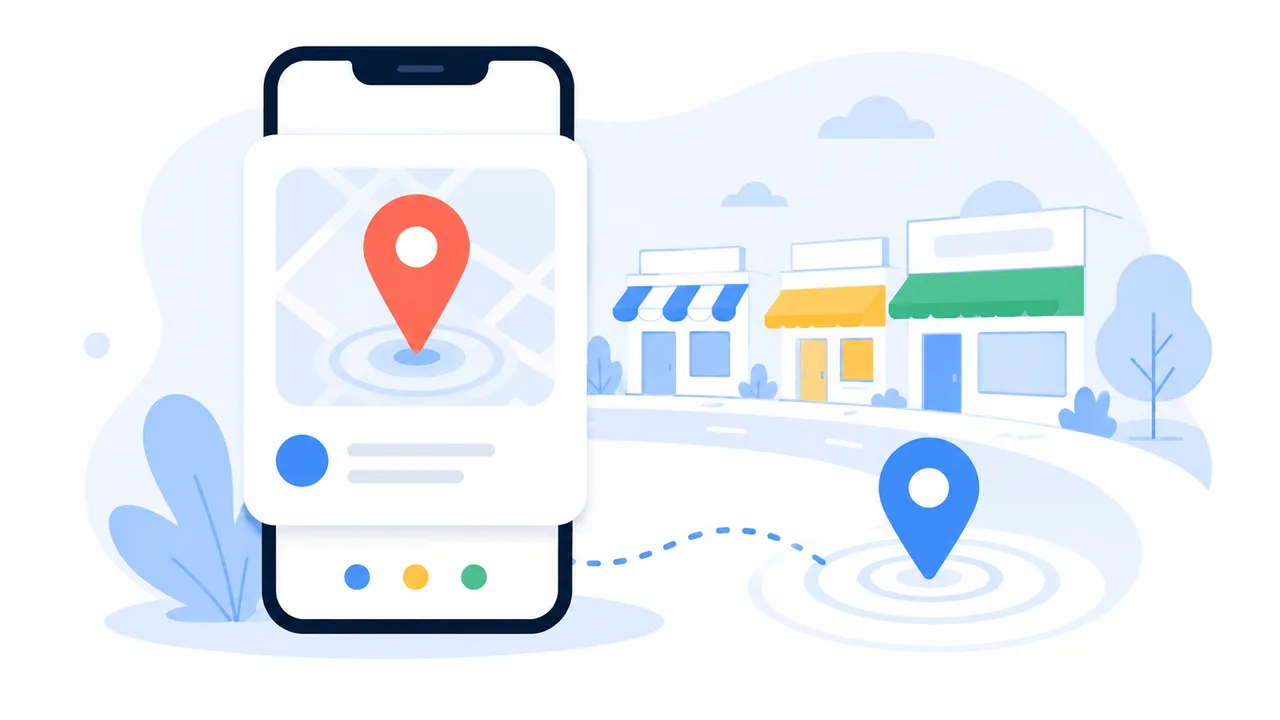
The most common mistake is treating "near me" as a keyword to target. It is not. Google does not match those words literally; it reads them as a signal that the searcher wants something nearby, then serves the best local options based on where they are. Writing "the best plumber near you" across your site does nothing, and reads badly to the customer.
What Google actually does is substitute the searcher's location for "near me". A search for "coffee near me" in Enfield Town is, to Google, "coffee in Enfield Town". So the work is not about the phrase at all. It is about being a strong, clearly located local entity for the places you serve.
| The myth | What actually works |
|---|---|
| Put "near me" all over your pages | Be a complete, well-categorised local entity |
| Target "near me" as a keyword | Earn proximity, reviews and local relevance |
| Add a long list of nearby towns | Genuinely serve and describe the areas you cover |
| Buy your way to the top of Maps | There is no paid option; it is earned |
How near-me searches are really won.
How you actually win near-me searches
Winning local-intent searches comes down to the same foundations that win the map pack: a complete, verified Google Business Profile with the right primary category, genuine proximity to the searcher, steady reviews, and content on your own site that ties you clearly to the areas you serve. Google assembles all of that into its judgement of who to show for a nearby search.
There is no separate "near me" tactic sitting on top of this. If your local SEO is strong, you already rank for the implied-location searches; if it is weak, no amount of phrasing fixes it. Near-me optimisation is really just local SEO done well, seen from the angle of the query.
Local schema: LocalBusiness and geo markup
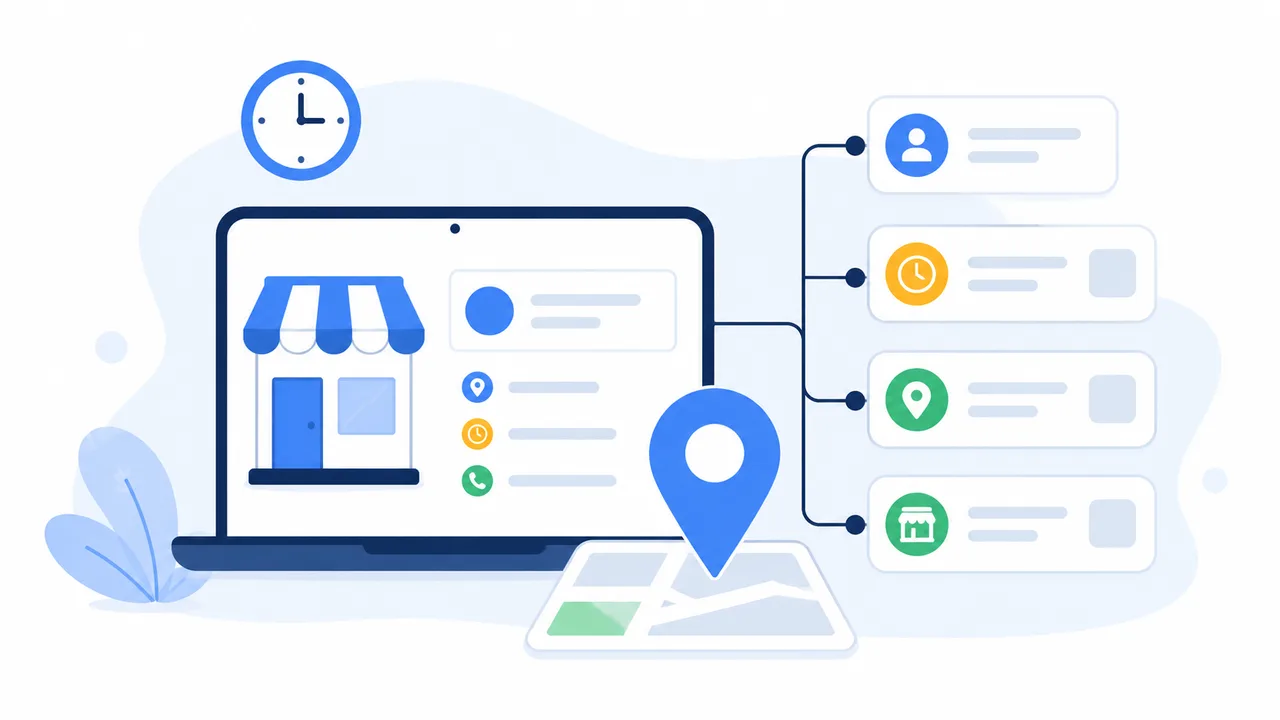
Structured data is where near-me optimisation has a piece of its own. LocalBusiness schema is the markup that states, in a form Google can read directly, your name, address, phone, opening hours, the area you serve and your geographic coordinates. It removes ambiguity about where you are and what you cover, which is exactly what a local-intent search turns on.
This is the local lane of schema. The technical fundamentals of schema types are covered in technical SEO, and the entity and AI side in our AI search guide. Here the point is to mark up your business as a LocalBusiness with accurate location and service-area details, and keep it consistent with your Google profile.
Voice search for local business
Voice search is mostly local and mostly about convenience: people ask their phone or speaker for the nearest something, the opening hours of a place, or a quick fact while their hands are busy. Assistants like Google Assistant, Siri and Alexa usually return a single spoken answer rather than a page of results, so the stakes of being that one answer are high.
For local queries the assistant leans heavily on your Google Business Profile and, for factual questions, often on the featured snippet Google has already chosen. So winning voice is less a separate project than the sum of a complete profile and clear, answer-first content. Phrasing matters at the margin, because people speak in full questions, so content that answers real questions plainly is what gets read aloud.
'Open now' and same-day searches
A large share of local searches carry "open now" or same-day intent: the searcher wants somewhere they can use immediately. Google takes this literally, favouring businesses that are open at the moment of the search, which makes one unglamorous thing critical: accurate opening hours on your Google profile, including special hours for bank holidays.
Hours that are wrong or missing do not just lose you these searches, they annoy the customers who turn up to a closed door, and that shows up in reviews. Keep your hours current, set holiday hours in advance, and use the relevant profile attributes so Google can match you to immediate, ready-to-act intent.
Mobile is where local intent lives
Almost all near-me and voice searches happen on a phone, often out and about, so a fast, easy mobile experience is part of capturing them. A page that loads slowly or is awkward on a small screen loses the impatient, on-the-go searcher before they convert, whatever your ranking.
Make sure your site is quick and comfortable on mobile, that your address and hours are easy to find, and that getting in touch takes one tap. None of this is exotic; it is the basic mobile hygiene that decides whether a high local ranking actually turns into a customer.
Writing for conversational and question queries
Spoken and modern local searches are longer and more conversational than the clipped keywords of a decade ago. People ask "where can I get a tyre fixed in Enfield on a Sunday" rather than "tyre repair Enfield". Content built around the real questions your customers ask, answered directly, matches this naturally and tends to win both featured snippets and voice answers.
A genuine FAQ section, using the actual phrasing of customer questions, is one of the most effective things you can add, and it overlaps with the answer-first approach in our on-page SEO guide. Write the way people ask, answer plainly, and you cover conversational, voice and AI-led searches at once.
Near-me, voice and AI assistants
The clear trajectory is that local-intent search is moving from typed keywords toward natural questions answered by assistants, whether that is voice, Google AI Overviews or a chatbot. The businesses positioned for it are not the ones gaming "near me", but the ones that are unambiguous, well-located, well-reviewed local entities with content that answers real questions.
That is the same foundation throughout: a strong Google profile, local relevance, accurate details and clear answers. Get those right and you win the near-me search today and the AI-assistant version of it next, covered in our AI search guide.